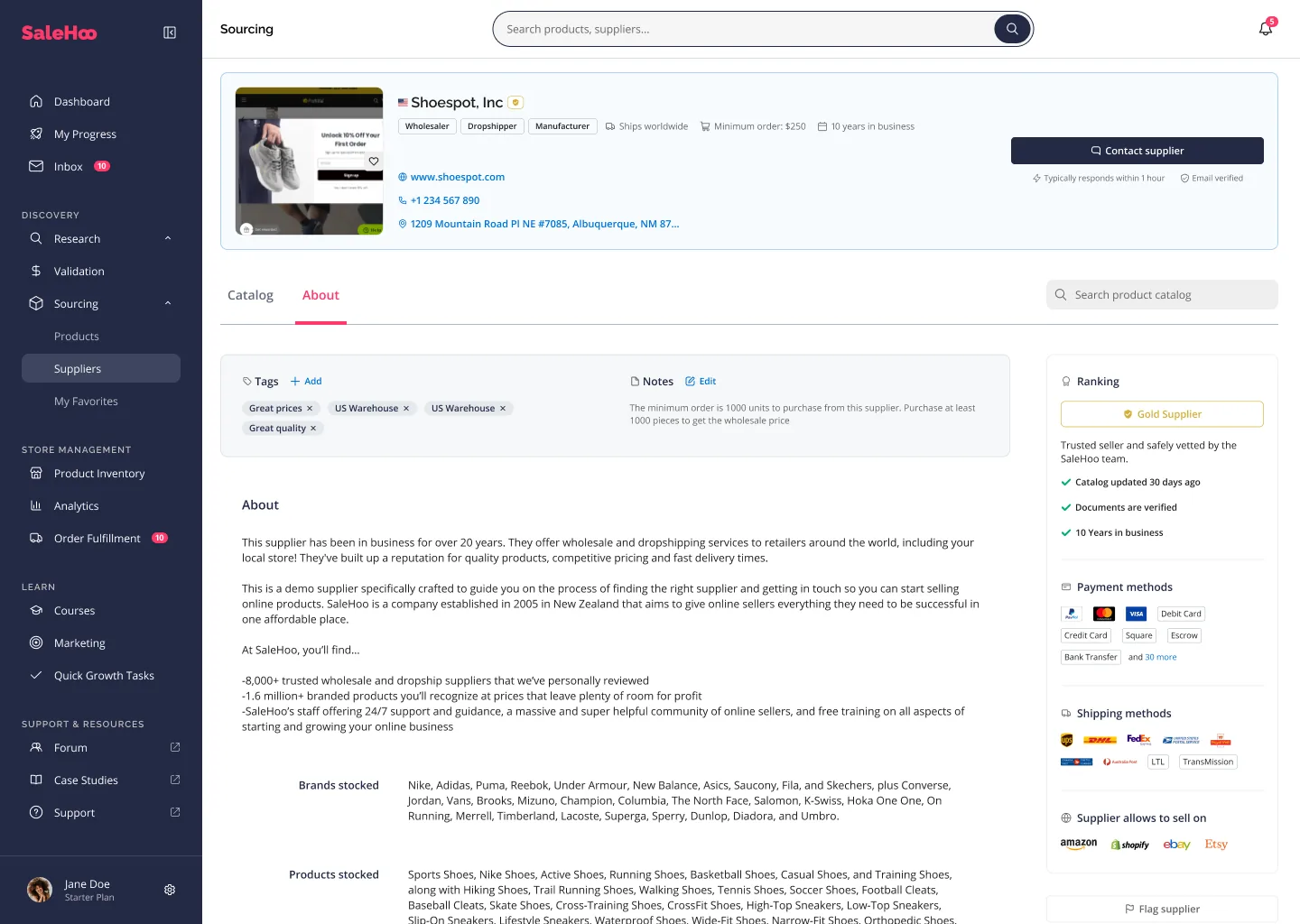
No single supplier research platform is best for every business. Compare a paid directory, marketplace sourcing, wholesale networks and Shopify apps based on actual suppliers, integrations, costs and operating controls.
Alternatives worth investigating
Alibaba and direct manufacturer outreach can make sense for bulk imports, while directories such as Worldwide Brands take a different membership approach. Shopify-oriented supplier platforms such as Spocket or other fulfillment apps have different automation models. Verify each provider’s current plans directly.
The goal is not to crown a winner without hands-on tests. Build a shortlist of tools that support your selling channel, product category and target delivery locations.
Compare on the same dimensions
Use five criteria: supplier coverage in your niche; independent supplier checks; platform compatibility; landed cost; and cancellation or lock-in. Add operational risk, like whether a single integration controls all inventory updates.
A free web search may work for experienced buyers with time and existing sourcing relationships. Paying for organization can be reasonable for beginners, but only if the directory's relevant supplier coverage saves meaningful research time.
Run a repeatable mini-test
For each option, identify five real supplier prospects, request the same quote fields and evaluate response completeness. For software, test importing and removing a product from a sandbox store.
Record any additional tools required. Compare annual spend, not just the advertised introductory monthly figure.
When the cheapest option is not the lowest total cost
The price of software is only one line in the operating budget. A low-cost directory that produces few usable supplier relationships may cost more staff time than a more focused alternative. Equally, a premium automation system is poor value if the store has too few orders or unsupported suppliers to benefit from its workflows. Document total monthly ownership cost and the exact manual tasks each option removes before selecting a plan.
Questions buyers ask
Which alternative should I compare first?
Start with the sourcing approach your business already needs: direct manufacturer relationships for wholesale, or an integration-first Shopify app for automated fulfillment. Compare on the same metrics.
Are free supplier lists always worse?
No. Free direct sourcing can be effective, especially for experienced buyers; its tradeoff is often more manual vetting and organization.
Should I select a product based only on supplier count?
No. Relevant supplier coverage, product compliance, shipping and cost fit matter more than catalog size.
The most reliable way to evaluate a sourcing product is to match its limitations to your actual business workflow.
Review our supplier checklist →References & fact-check sources
SaleHoo product specifications are taken from vendor materials. General sourcing advice is our editorial interpretation, not an account-level performance test.
Compare the current SaleHoo offering
Check the latest product details directly with the vendor. This is an independent site.