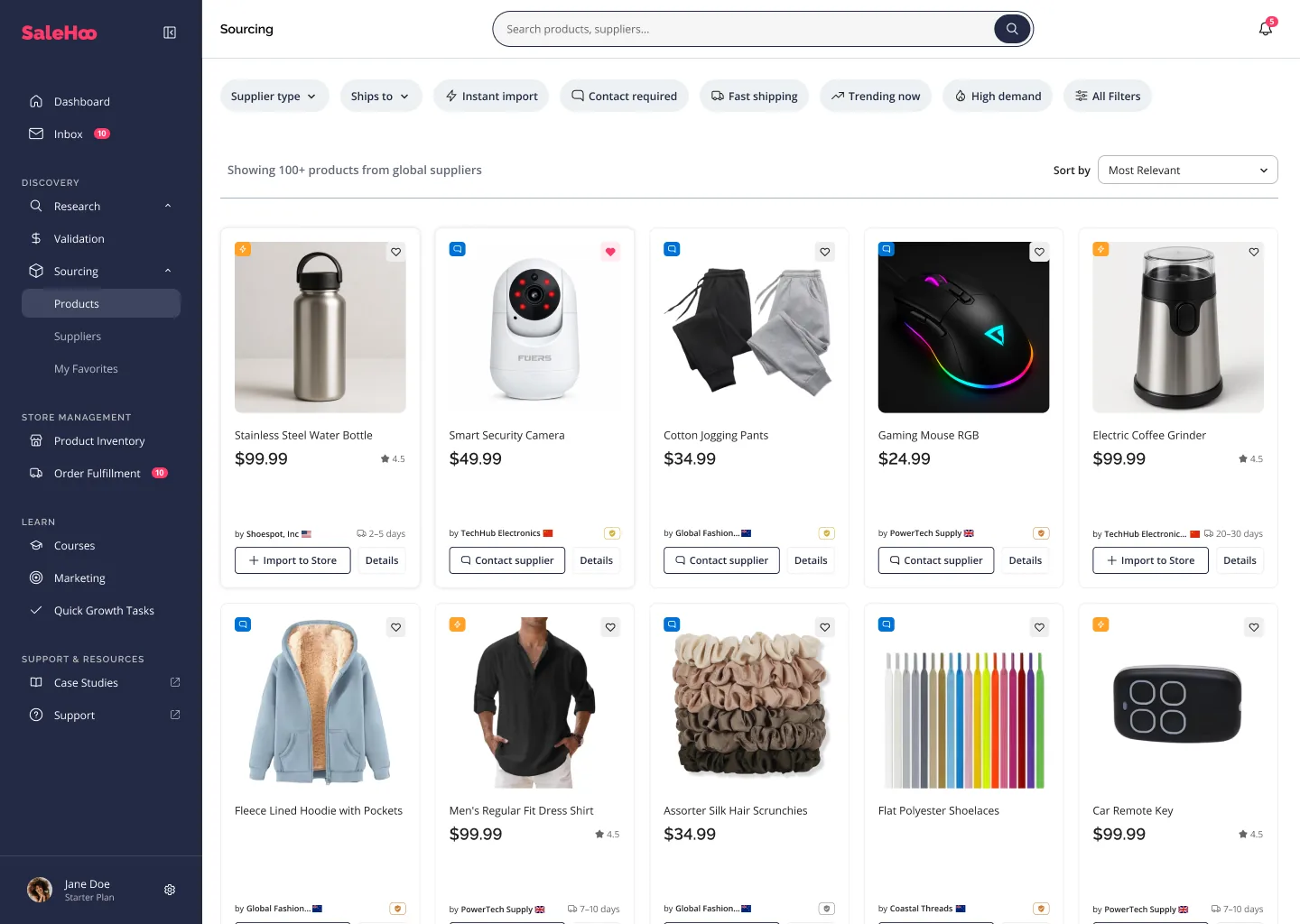
Dropshipping and wholesale are operational choices, not shortcuts to guaranteed income. The right model depends on available capital, inventory appetite, customer expectations and supplier relationships.
Dropshipping fundamentals
A third party usually ships the goods after the customer places an order. That can reduce inventory investment but makes you dependent on supplier stock, dispatch and package quality.
Your store still handles customer expectations, product accuracy, policy compliance and disputes.
Wholesale fundamentals
Wholesale often provides better unit economics at volume, but you may need to buy, store and move inventory yourself. Working capital, forecasting and unsold stock become major considerations.
A small test buy helps assess real sell-through before larger purchase commitments.
Hybrid approach
Some sellers test demand through supplier fulfillment and later stock winning products. That can be sensible only if supply terms and customer promises allow it.
Questions buyers ask
Which model uses less inventory capital?
Dropshipping generally reduces inventory purchasing but may bring higher per-unit costs and less fulfillment control.
Is wholesale always more profitable?
No. Carrying costs, inventory markdowns and slow sell-through can offset lower unit costs.
Can I use a hybrid model?
Yes, if supplier arrangements and customer promises permit it. Test small before making the inventory commitment.
The most reliable way to evaluate a sourcing product is to match its limitations to your actual business workflow.
Review our supplier checklist →References & fact-check sources
SaleHoo product specifications are taken from vendor materials. General sourcing advice is our editorial interpretation, not an account-level performance test.
Compare the current SaleHoo offering
Check the latest product details directly with the vendor. This is an independent site.